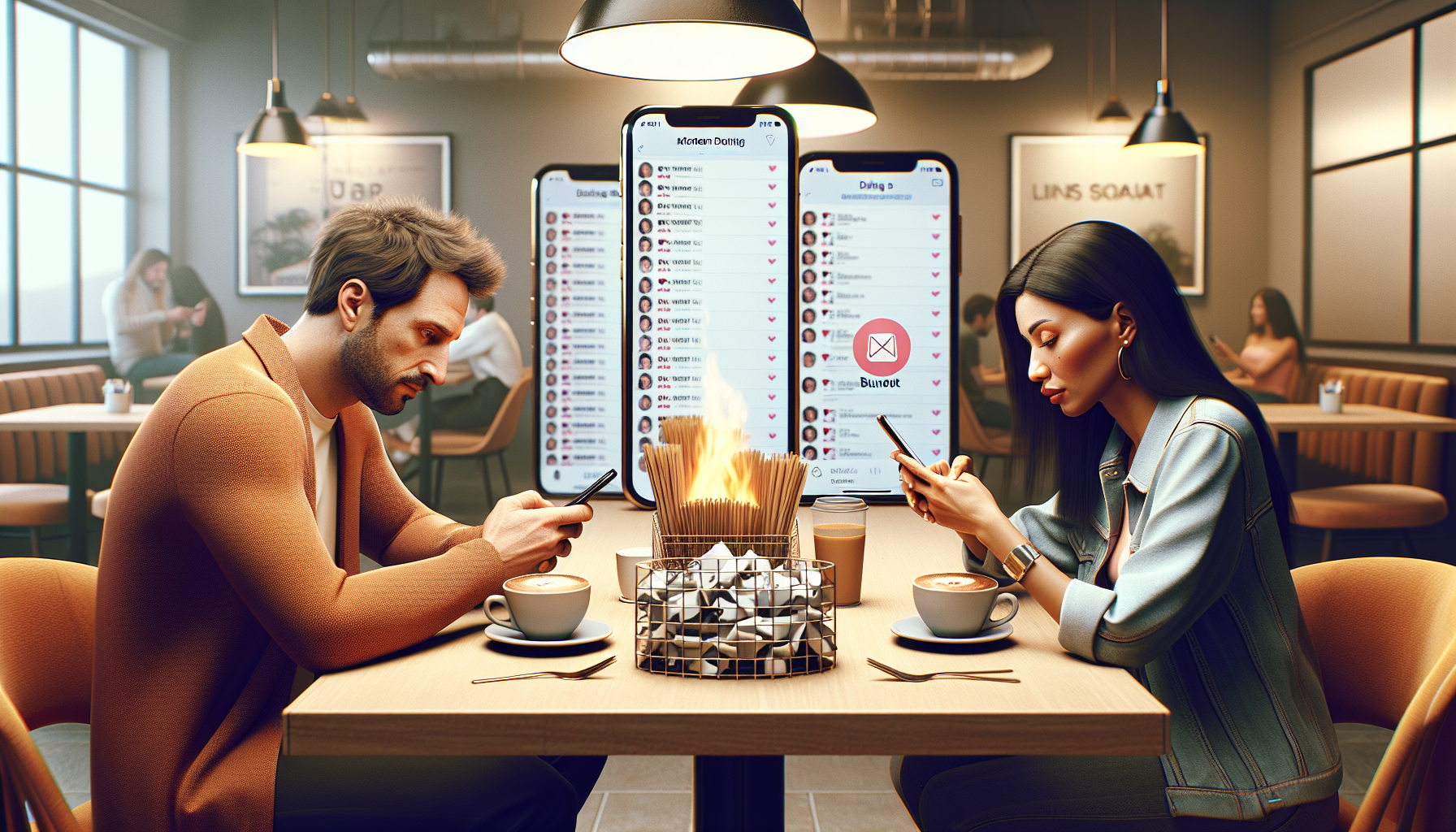
Swipe fatigue, signal dilution, and decision paralysis have a technical architecture behind them. The question of why modern dating feels harder than ever sits at the intersection of algorithmic design, platform monetization, and shifting social norms. Empirical measures—platform engagement, churn, conversion funnels—explain parts of the puzzle; behavioral economics and signaling theory explain the rest.
Public research and corporate disclosures make clear why modern dating feels harder than ever: a 2019 Pew Research Center report documented online dating adoption across demographics while Match Group’s investor filings map monetization pressures that bias product choices. Together, those forces amplify emotional labor and create new failure modes in courtship.
Advanced Insights & Strategy
Concise summary: A strategic framework must treat dating as a socio-technical market. Combine platform economics, human signaling, and time-allocation models to design interventions that reduce burnout rather than amplify engagement metrics.
Strategic recommendation: replace engagement-first heuristics with retention and well-being metrics. For product teams, that means adopting a triple-layer framework: (1) Product-level friction design (micro-commitment gating and limited daily matches), (2) Community-level norms engineering (moderation policies and reputation signals), and (3) Measurement-level switches (well-being KPIs instead of DAU alone). Companies such as Hinge have already experimented with “prompts” and profile structuring to increase meaningful matches; transplanting Hinge-style friction into other products requires cross-functional coordination—data science, design, community moderation, legal.
At the measurement layer, use a metric mix modeled on subscription businesses: monitor cohort retention (week-1, week-4, month-3) and track qualitative outcomes (percentage of matches leading to offline meetings). Integrate instrumentation from Amplitude or Mixpanel and combine survey panels (via Qualtrics) for longitudinal signals. This approach translates why modern dating feels harder than ever from anecdote into testable product hypotheses, exposing whether changes reduce churn or merely shift noisy engagement.
Algorithmic Overload: Matching at Scale
Concise summary: Algorithms expanded the choice set by orders of magnitude, but they also created attention scarcity and noisy matching. The match surface now favors short-term engagement signals over durable compatibility indicators.
Feed Dynamics and Engagement Bias
Recommendation engines borrowed tactics from social feeds. Tinder and Bumble optimize for swipe velocity and session length; product telemetry from Match Group and Bumble’s investor communications indicate these platforms prioritize matching velocity to preserve top-line engagement. That creates a feedback loop: faster swiping -> weaker signals -> more swiping to compensate.
Design choices matter. When an algorithm rewards immediate replies, users adapt by crafting low-effort messages and prioritizing matches with rapid response time over compatibility metrics. This is one structural reason why modern dating feels harder than ever—the platform incentives push behavior toward short-term interaction patterns that feel unsatisfying.
Signal-to-Noise Ratio and Profile Inflation
Profile inflation—the proliferation of curated photos, optimized prompts, and third-party editing apps—reduces the signal-to-noise ratio in matching pools. Brands like Photofeeler and Facetune changed visual presentation practices; those tools drive a professionalized personal branding economy where subtle cues about values and habits are lost.
Human raters and A/B tests (run at companies like Hinge and OkCupid) show that when profiles are visually optimized at scale, conventional discriminators—occupation, hobbies—become less predictive. That phenomenon explains part of why modern dating feels harder than ever: decision fatigue results from reduced marginal information per profile, lengthening the time-to-confidence for potential selection.
Algorithmic Transparency and Trust
Opaque matching logic erodes trust. Users expect rational criteria but encounter black-box scoring and sponsored boosts. Regulatory attention—e.g., consumer protection inquiries in the EU and FTC interest in dark patterns—has increased. Lack of transparency drives skepticism and reduces the likelihood of sustained effort in forming connections.
Trust-building mechanisms aren’t theoretical. Initiatives like Hinge’s “designed to be deleted” messaging are product-level signals intended to counteract engagement-first optimization. However, mixing promotional boosts with purported “authenticity” messaging introduces brand dissonance and increases user cynicism, intensifying why modern dating feels harder than ever.
Choice Paradox and why modern dating feels harder than ever
Concise summary: An abundance of options induces selection paralysis and inflated expectations; the choice paradox has measurable cognitive costs and downstream emotional effects on relationship formation.
Behavioral Economics of Excess Choice
Barry Schwartz’s classic framing of choice overload remains relevant. Experimental work from behavioral economists shows satisfaction declines when the option set grows beyond a cognitive threshold. In dating markets, that threshold moves with interface design—swipe UIs and unlimited browsing expand perceived available partners dramatically.
Practical effect: users evaluate matches comparatively and defer commitment, seeking ever-better alternatives. That phenomenon speaks directly to why modern dating feels harder than ever: the pursuit of the marginally superior match increases time-to-commitment and reduces satisfaction from any given choice.
Subscription Mechanics and Decision Friction
Paid features shift behavior. Match Group and Bumble report in earnings calls that premium productization (super-likes, visibility boosts, read receipts) changes user calculus. When the platform places scarcity behind paywalls, signaling becomes commodified—users pay to be noticed rather than relying on profile quality, adding transactional friction to emotional labor.
The commodification of attention skews the market towards those willing to invest money into visibility. That economic gatekeeping raises expectations and contributes to a sense of unfairness, which factors into why modern dating feels harder than ever for users without disposable income for premium features.
Choice Architecture Remedies
Architectural interventions reduce choice overload: curated daily matches (Hinge’s “Most Compatible”), limited-match experiments, or batching notifications. Field experiments on limited-choice mechanisms (A/B testing at dating startups) show higher reply rates and fewer churn events when choice is intentionally bounded.
Operationalizing these remedies requires product and policy shifts. Legal teams must adapt to consumer disclosure standards for experiments, while growth teams must accept short-term revenue trade-offs for long-term retention. Adoption of such policies explains why modern dating feels harder than ever—companies resist changes that lower immediate monetization.
| Metric | Swipe-based Apps | Curated/Subscription Apps |
|---|---|---|
| Engagement Signal | High swipe velocity, short sessions | Lower frequency, higher message depth |
| Monetization | Boosts, visibility packs | Subscription revenue, long-term cohorts |
| User Satisfaction (proxy) | Short-term lift, long-term churn risk | Higher matching quality, longer retention |
Communication Frictions: why modern dating feels harder than ever
Concise summary: The grammar of courtship has fragmented. Ghosting, breadcrumbing, and other micro-behaviors are amplified by asynchronous chat and low-cost exit strategies, increasing emotional labor and ambiguity in interpreting intent.
Ghosting, Silent Exits, and Norm Formation
Patterns of silent exits—ghosting—have been documented in multiple surveys and occupy mainstream discourse in publications like The Atlantic and The Guardian. The structural affordances of platforms (one-tap unmatch, easy blocking) enable low-cost exits that replace social friction with procedural exits.
Those affordances create social norm uncertainty. When norms are not enforced by community or platform moderation, users default to defensive strategies—over-communication, hedging, and multi-threaded courting—which explains why modern dating feels harder than ever: each interaction carries more potential for interpretive harm and emotional costs.

Asynchronous Communication and Misaligned Expectations
Asynchronous messaging increases miscommunication. Real-time signals (tone, pacing) are lost; textual exchanges intensify interpretation errors. Psycholinguistic studies on text-based conversation (published in journals like Journal of Social and Personal Relationships) show that latency and brevity skew perceived interest.
Operationally, platforms could implement read receipts with delays or structured conversation prompts to reduce ambiguity. Those are not commonly default features because they impact engagement metrics. The tension between product growth and communicative clarity is central to the debate about why modern dating feels harder than ever.
Labor of Care and Emotional Costs
Dating requires time allocation. Estimating calendar costs—profile creation, message triage, coordinating meetups—reveals a nontrivial opportunity cost. Users often report spending evenings answering messages, which contributes to burnout. The labor is real and measurable in time-use surveys conducted by organizations like the Bureau of Labor Statistics, which track leisure and social activity patterns.
Allocating time to dating competes with work, caregiving, and social obligations. The mismatch between expected outcomes (a stable relationship) and input (serial short-term interactions) feeds frustration and explains, empirically and experientially, why modern dating feels harder than ever.
Platforms, Monetization, and Behavioral Incentives
Concise summary: Platform business models shape user behavior. Engagement metrics tied to ad and subscription revenue favor rapid interactions and novelty over relationship scaffolding, skewing incentives against durable connection formation.
Monetization Pathways and Design Trade-offs
Product-led growth strategies that prioritize DAU and MAU metrics shift design toward retention by frequent re-engagement. Match Group’s public filings show a portfolio strategy—Tinder for scale, Hinge for depth—yet even Hinge is under pressure to justify growth with paid features and sponsored visibility, creating a structural tension between monetization and match quality.
When revenue targets demand rising engagement, engineering teams implement features like gamified streaks or boosts. Even small nudges alter behavior at scale, contributing to the operational reality of why modern dating feels harder than ever: platform choices alter social dynamics in ways users can sense but seldom control.
Regulatory and Ethical Considerations
Regulatory scrutiny is increasing. The EU’s Digital Services Act and various consumer protection inquiries compel companies to disclose manipulative design. Ethical product teams are testing honesty-first affordances—transparent matching criteria, clear monetization language—but industry adoption is uneven.
These shifts matter for user trust and long-term sustainability. If platforms are forced to measure success by long-term outcomes—relationship formation rates, reported satisfaction—product choices will change. That would directly address part of why modern dating feels harder than ever by aligning incentives with user well-being.
Case Study: Hinge vs. Tinder Product Choices
Hinge’s public positioning and campaigns like “designed to be deleted” represent brand-level attempts to differentiate on outcome rather than engagement. Tinder’s product roadmaps emphasize scale. Public commentary and press releases from both companies provide a clear contrast: one prioritizes curated matches and prompts; the other emphasizes reach and velocity.
These divergent strategies yield measurable differences in user testimonials and retention metrics in industry reports. The dichotomy between mass-market swiping and curated matching is a central mechanism explaining why modern dating feels harder than ever—users must pick not just a match, but a matching philosophy aligned with personal goals.
“The architecture of the platform shapes the architecture of the relationship; when design optimizes for attention rather than compatibility, users pay the cost in satisfaction.” – Eli Finkel, PhD, Professor of Psychology, Northwestern University
Frequently Asked Questions About why modern dating feels harder than ever
How do platform incentive structures cause users to experience why modern dating feels harder than ever?
Platforms optimize for metrics like session time and swipe velocity, which encourages short, frequent interactions and reduces depth. Public filings from Match Group and feature releases (boosts, super-likes) show incentives that increase visibility rather than compatibility, creating a gap between user expectations and platform goals.
Which measurable behaviors best predict burnout in online dating?
High churn cohorts show elevated session frequency with low message reply rates and short conversation lengths. Instrumentation via Mixpanel or Amplitude can track session-to-reply ratio and time-to-first-meet; cohorts with low conversion from match-to-meet exhibit higher reported fatigue in survey panels administered through Qualtrics or SurveyMonkey.
Why do choices on apps make people feel indecisive—what evidence supports this being a real cognitive effect?
Behavioral economics experiments demonstrate reduced satisfaction when option sets exceed cognitive quotas. Applied to dating, the feature set of swipe UIs dramatically increases perceived alternatives, and academic literature on choice overload maps onto anecdotal evidence and platform metrics showing longer time-to-commit.
What product changes have companies like Hinge implemented that address why modern dating feels harder than ever?
Hinge introduced structured prompts, curated match suggestions, and profile emphasis on narrative rather than image-only selection. Public statements and marketing campaigns reflect a prioritization of match quality; early KPI changes show improved message depth and session-intent metrics in specific cohorts.
How should research teams quantify whether interventions mitigate why modern dating feels harder than ever?
Use randomized controlled trials with cohort tracking for outcome variables: match-to-meet rate, message depth, and self-reported satisfaction. Combine event telemetry with survey instruments (e.g., daily diaries) to capture affective outcomes, and track retention across week-1, week-4, and month-3 cohorts.
Why do socioeconomic factors influence perceptions of why modern dating feels harder than ever?
Premium features that boost visibility create a tiered experience; users with disposable income gain outsized attention. Economic inequality thus translates into differential match rates and perceived fairness, resulting in higher burnout among users without access to paid product tiers.
Is there evidence that limiting choices reduces the feeling of why modern dating feels harder than ever?
Field experiments and A/B tests implementing limited-match models often show higher reply rates and longer conversation lengths. These tests, executed by product teams at curated apps, provide convergent evidence that bounded choice can reduce decision paralysis and improve perceived match quality.
How do communication norms (ghosting, breadcrumbing) increase the overall sense that why modern dating feels harder than ever?
Low-cost exit mechanisms reduce social friction and increase ambiguity. When norms are unclear, defensive strategies proliferate—over-messaging, simultaneous conversations—which raises emotional labor and lowers perceived stability in interactions, producing widespread frustration.
Conclusion
The question of why modern dating feels harder than ever maps onto product design, market economics, and social psychology. Platform incentives magnify choice and reduce signal quality; asynchronous communication creates ambiguity; and monetization strategies commodify attention. Fixes require changes to metrics, consent architecture, and platform transparency—each addressing a structural cause of why modern dating feels harder than ever and reducing the operational causes of burnout.
Find out more information about “why modern dating feels harder than ever”
Search for more resources and information: