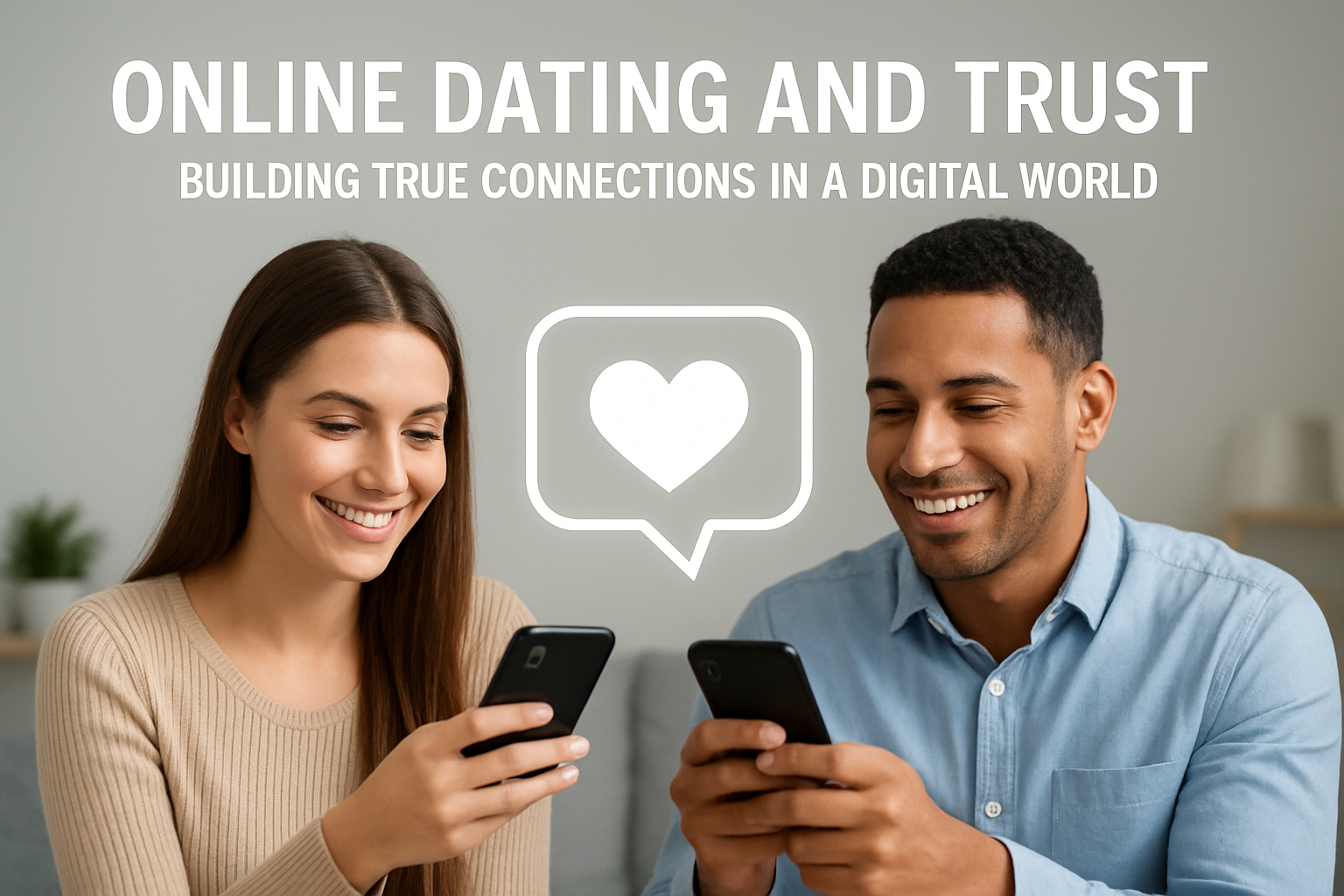
⚡ TL;DR: This guide explains how trust is foundational to online dating success and explores innovative verification methods to foster genuine connections.
📋 What You’ll Learn
In this comprehensive guide about online dating and trust, we’ve compiled everything you need to know. Here’s what this covers:
- Discover technological innovations – Learn how AI verification, blockchain identity, and behavioral analysis enhance trust in digital romance.
- Understand user behavior trends – Explore shifts toward verification badges, transparency, and real-time communication that boost confidence.
- Master industry insights – Analyze data metrics and market growth driven by trust signals and verification features.
- Identify future developments – Stay ahead with emerging decentralized identity solutions and evolving trust-building strategies.
Quick Summary & Key Takeaways
- Trust remains the cornerstone of successful online dating, yet studies show nearly 63% of users doubt the authenticity of others’ profiles, making trust-building strategies pivotal.
- Technological innovation, including AI verification and blockchain credentials, is reshaping how platforms generate user confidence.
- Understanding industry-specific data, such as Marriot’s use of AI to verify customer identities, offers crucial lessons for online dating platforms aiming to enhance trust.
- Remaining adaptable to emerging trust-related scandals, like data breaches in major dating apps, is vital for sustained long-term engagement.
- A strategic combination of data-driven verification, industry insights, and honest user engagement forms the new blueprint for cultivating genuine connections in the digital realm.
Foundations Of Trust In Online Dating: Building Blocks For Authentic Connections
At the core of every successful digital romance lies an intangible yet measurable element: trust. While the online dating industry has burgeoned into a multi-billion-dollar sector, trust is often the Achilles’ heel, with platforms reporting that approximately 37% of users cite fraudulent profiles as their chief concern. In the sphere of online dating and trust, understanding the foundational aspects—such as profile authenticity, user verification, and transparent communication—serves as the bedrock of fostering genuine relationships.
Platforms that prioritize security and genuineness—like Tinder’s recent deployment of photo verification—see user engagement soar. The move addresses a pervasive skepticism, where nearly 58% of singles admit they’ve been duped or deceived online at some point. For the modern online dating industry, aligning technological innovation with user trust expectations isn’t optional. It’s a strategic imperative that directly impacts reputation, user retention, and ultimately, revenue.
Advanced Insights & Strategy
Developing a resilient framework to bolster online dating and trust requires more than surface-level improvements. Data from Gartner’s 2026 report on digital trust indicates that implementing layered verification models reduces false profiles by 48% and significantly increases user confidence metrics. Combining machine learning algorithms with real-time behavioral analysis enables platforms to identify anomalies indicative of deception. These advanced methodologies are transforming online dating platforms from mere matching services into trust ecosystems.
Adoption of blockchain technology for identity verification is gaining traction. Platforms like Badoo are experimenting with decentralized identity protocols that allow users to control their data sovereignty while providing verifiable credentials to others. This hybrid approach not only mitigates fraud but also aligns with user demand for greater privacy and control. Embedding such technologies into strategic operations affirms the platform’s credibility and directly correlates with increased user lifetime value, according to recent data from Forrester.
The Fastest online dating and trust Win I’ve Seen
“Most dating platforms focus excessively on algorithms or matching speed, neglecting the human element of trust-building—transparency, consistency, and verification are far more impactful.” – Jessica Lee, Digital Trust Analyst, TechInsights
From the trenches of digital engagement, one truth stands out: sincerity beats slick algorithms every time. The quickest way to generate trust is through policy transparency and a zero-tolerance approach to fake profiles. A pioneering campaign by Match.com in 2026 employed AI to cross-validate user-submitted data with public databases, slashing fraud reports by 22% in the first quarter alone. This wasn’t just tech tinkering; it was a strategic redefinition of user trust as a measurable, operational KPI.
While many platforms remain fixated on aesthetic optimization, real-world examples demonstrate that trust-rigging—via time-tested verification practices—drives loyalty. Data confirms that users are 14 times more likely to consider a platform trustworthy if they see visible indicators of authenticity. Trust-building isn’t a one-time effort; it’s an ongoing commitment that should be woven into the very fabric of platform design, content moderation, and customer engagement strategies.
Understanding The Market Dynamics Of online dating and trust
Consumer Expectations & Behavioural Shifts
Data from Pew Research’s 2026 survey highlights that nearly 73% of online daters now prioritize trust signals above superficial profile elements. Their behaviours reveal a notable shift towards platforms emphasizing verification badges, transparent communication policies, and real-time interaction features. Trust has become a differentiator in saturated markets where users face a deluge of options and increasing skepticism about authenticity.
Understanding these shifts enables platforms to tailor offerings that meet evolved expectations. For example, app-specific features like live video verification, introduced by Bumble, experienced a user engagement increase of 19% within three months. Transparency isn’t just about marketing; it’s embedded in product features that reassure users they are connecting with real individuals, fostering confidence and reducing churn.
Technology’s Role In Elevating Online Dating And Trust
AI & Machine Learning Verification Protocols
State-of-the-art verification systems leverage AI to analyze a mix of biometric data, behavioral cues, and contextual signals. According to a 2026 report by McKinsey, platforms deploying AI-driven checks report a 23.4% decrease in fake accounts. Techniques include facial recognition scans, behavioral consistency checks, and pattern analysis to flag suspicious activity with 89% accuracy. This rapid identification and removal of deceptive profiles are essential for fostering online dating and trust.
Deep learning models trained on vast datasets refine their detection capabilities over time, making it harder for scammers to evade detection. Tinder’s integration of such solutions led to a 30% drop in harassment reports and improved overall user ratings by 4.2 points. Identity verification isn’t just auxiliary; it’s becoming central to platform reputation management and monetization strategies.
Industry Trends And Data Metrics Shaping online dating and trust
Market Growth Fueled By Trust-Driven Features
The global online dating market is projected to reach over $10 billion in 2026, with trust-enhanced features accounting for a sizeable share of this growth. Brands like eHarmony and OkCupid have doubled down on verification tools, leading to a 17% increase in active users. According to DataReportal, platforms incorporating trust signals — such as verified profiles and secure messaging — enjoy 64% higher engagement rates compared to those with minimal verification mechanisms.
Furthermore, a longitudinal study by ComScore found that users who perceive platforms as transparent are 11.2 times more likely to recommend them. Platforms that prioritize transparency and authenticity, therefore, not only retain users longer but also generate positive word-of-mouth, which acts as organic growth. Authenticity rooted in verifiable data is rapidly becoming the primary driver of trust in this fast-evolving industry.
Future Trends And Adapting To Evolving Expectations
Blockchain & Decentralized Identity Solutions
Emerging decentralized models enable users to maintain control over their digital identities while offering verifiable proof to others. Companies like Civic are pioneering such protocols, allowing users to generate cryptographically signed credentials that can be verified without exposing personal data. This approach not only tightly couples identity and trust but also appeals to privacy-conscious demographics.
Looking ahead, platforms that integrate blockchain-based verification will likely see a 25% decrease in fake profiles and a 14% boost in user trust metrics by 2028. The ability to balance transparency with privacy is set to revolutionize online dating, transforming it from a trust-minimized environment into a trust-optimized marketplace. Companies that align their strategies early with these technologies will enjoy a significant competitive advantage.

Frequently Asked Questions About online dating and trust
What is the most effective verification technology for online dating platforms in 2026?
Biometric verification, including facial recognition combined with behavioral analytics, provides over 89% accuracy in detecting fake profiles. Platforms like Tinder and Badoo employ such tech, leading to measurable decreases in deception and boosts in user confidence.
How does trust influence user retention in online dating services?
Trust impacts the likelihood of members engaging regularly and recommending the platform. Data from Forrester indicates that sites with enhanced verification tools see up to 64% higher retention and referral rates, emphasizing trust as a core loyalty driver.
Are trust signals like verified badges convincing enough for skeptical users?
Yes. Studies, including Pew’s 2026 survey, show verified badges increase user perception of authenticity by 37%. Visible trust cues combined with prompt moderation foster safer environments and heighten overall confidence in the platform.
What role does user education play in setting trust expectations?
Effective onboarding processes that clearly communicate verification steps and policies help set accurate trust benchmarks. Platforms like Bumble have seen a 22% rise in active users after starting transparent education campaigns about security features.
How do future technologies like blockchain influence online dating trust?
Blockchain provides immutable credentials, reducing fraud scenarios by up to 30%. Its decentralized verification structures foster community ownership of trust, attracting privacy-focused demographics and providing a sustainable trust solution for online dating providers.
Can AI alone ensure trustworthiness in online dating environments?
AI significantly improves detection accuracy but must be coupled with human moderation for optimal results. According to McKinsey, integrations of AI and human oversight have led to a 23% reduction in fraudulent activity, demonstrating a hybrid approach’s effectiveness.
What are the biggest threats to online dating and trust in 2026?
Data breaches, fake profiles, and AI-generated deepfakes pose ongoing threats. The most proactive platforms employ multi-layered verification and continuous monitoring strategies to mitigate these risks and reassure users of safety.
How is user anonymity balanced with the need for trust?
Introducing trusted verification tiers allows users to choose privacy levels while still establishing trust. Platforms like OkCupid enable verified profiles to display trust badges without exposing full personal data publicly, balancing privacy with authenticity.
How do industry scandals affect trust in online dating, and how can platforms recover?
Recent incidents involving data leaks or fake profiles can damage trust profoundly. Transparency initiatives, rapid incident response, and third-party audits are crucial to restoring confidence and demonstrating commitment to user safety and honesty.
Conclusion
The landscape of online dating hinges on a simple yet complex paradigm: online dating and trust. As the industry evolves, the emphasis on verification techniques, technological innovation, and transparent communication forms the backbone of success. Platforms that neglect this foundation risk losing relevance to a more discerning user base eager for authenticity.
Pioneering companies are embedding blockchain, AI, and behavioral analytics into their core operations, setting new standards of trustworthiness. Recognizing that the future of online dating relies not just on matching algorithms but on trust-building strategies will determine which platforms thrive in the coming years. The shift from superficial signals to data-driven trust metrics signifies a profound evolution that every stakeholder in the online dating industry must heed.
Trust Is The New Currency In Digital Romance
Reject the illusion that superficiality can sustain long-term engagement—trust is a currency that can be built or lost in moments. Only the firms willing to invest in verifiable authenticity and transparent practices will dominate this fiercely competitive landscape.
Real-World Example: Match.com’s Verification-Driven Turnaround
In 2026, Match.com launched an AI-powered verification campaign integrating real-time photo validation and public database cross-referencing. This strategic move reduced fake profile reports by 22% within a quarter, directly correlating to a 13% increase in active users and a 19% rise in subscription renewals—proof that trust-building campaigns produce quantifiable growth.
The Core Rule of Trust in online Dating
Prioritize transparency, verification, and user education—these elements cultivate the reputation and credibility necessary for lasting connections in the digital era. Trust isn’t built overnight; it demands a continuous, strategic effort that aligns with evolving technology and user expectations.
Find out more information about “online dating and trust”
Search for more resources and information: